BLOG
Where to put a vape sensor in a rental, room by room
 By Nangyal Khan·
5 min read
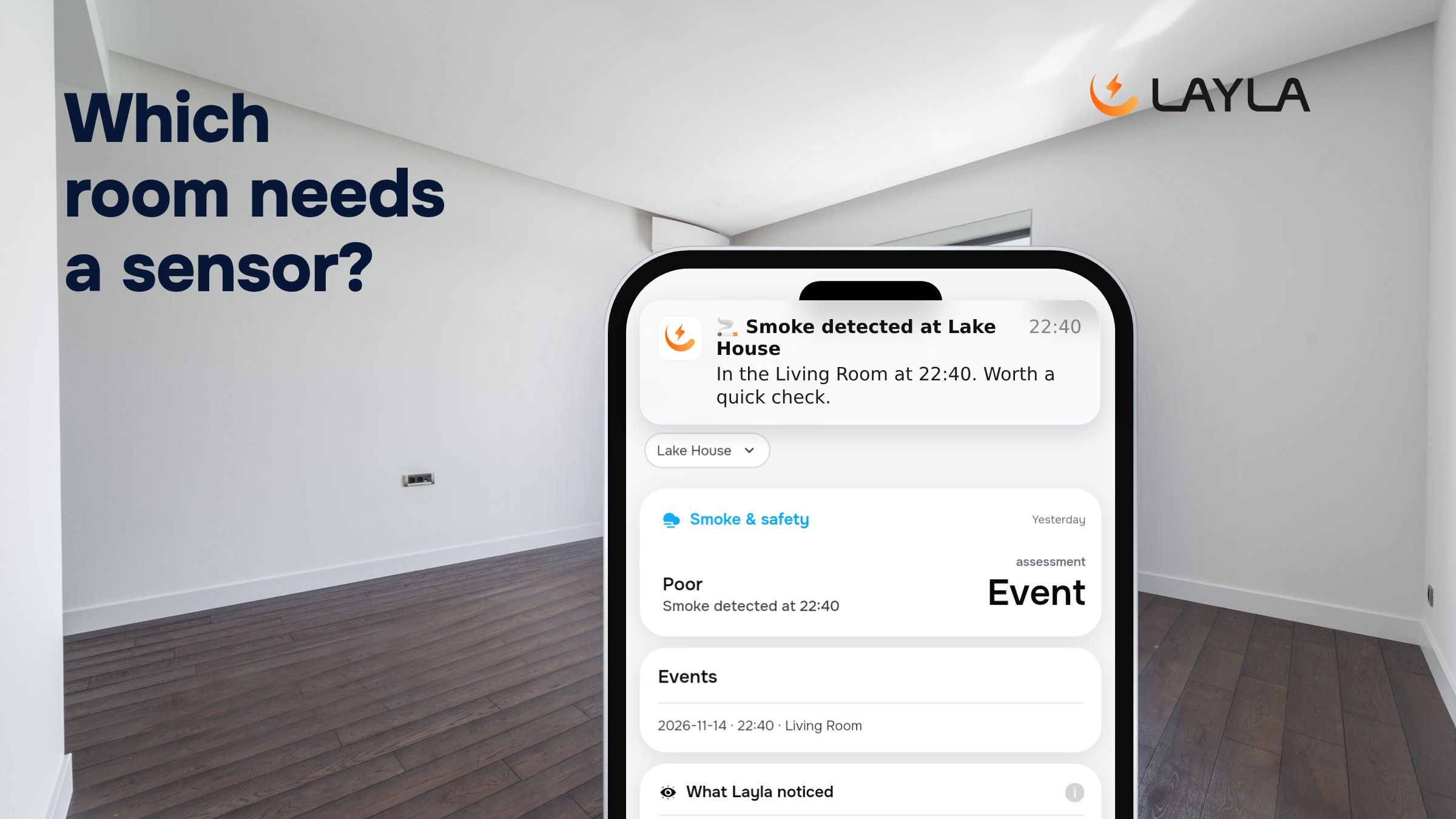
Put one Layla sensor in each shared room where a guest would smoke or vape: the living room, the room by the balcony or patio door, a den nobody sleeps in. Plug it into a wall outlet in that room. Layla reads smoke in the room it is in, and when someone smokes or vapes it alerts you with the time and the room. On Airbnb, keep every sensor out of bedrooms, bathrooms and sleeping areas, and tell guests it is there.
See Smoke & Air Quality: smoke and vape alerts for $99, once
Where do guests smoke and vape in a rental?
Guests don't light up at random. They pick the spots they think nobody will notice, and where the smell seems easy to air out.
- By the balcony or patio door, half in and half out, so the smoke drifts back inside.
- On the living room sofa by an open window, late in the evening, once the group has settled in.
- In a bedroom or bathroom with the fan on, door shut, hoping the fan clears it before morning.
Vaping is the hardest to find. It leaves little smell, so a host rarely notices it at checkout, and the next guest may be the first to complain. The rooms that matter are the ones guests spend their evenings in, which is where a sensor does its work.
Which rooms can I put a sensor in on Airbnb?
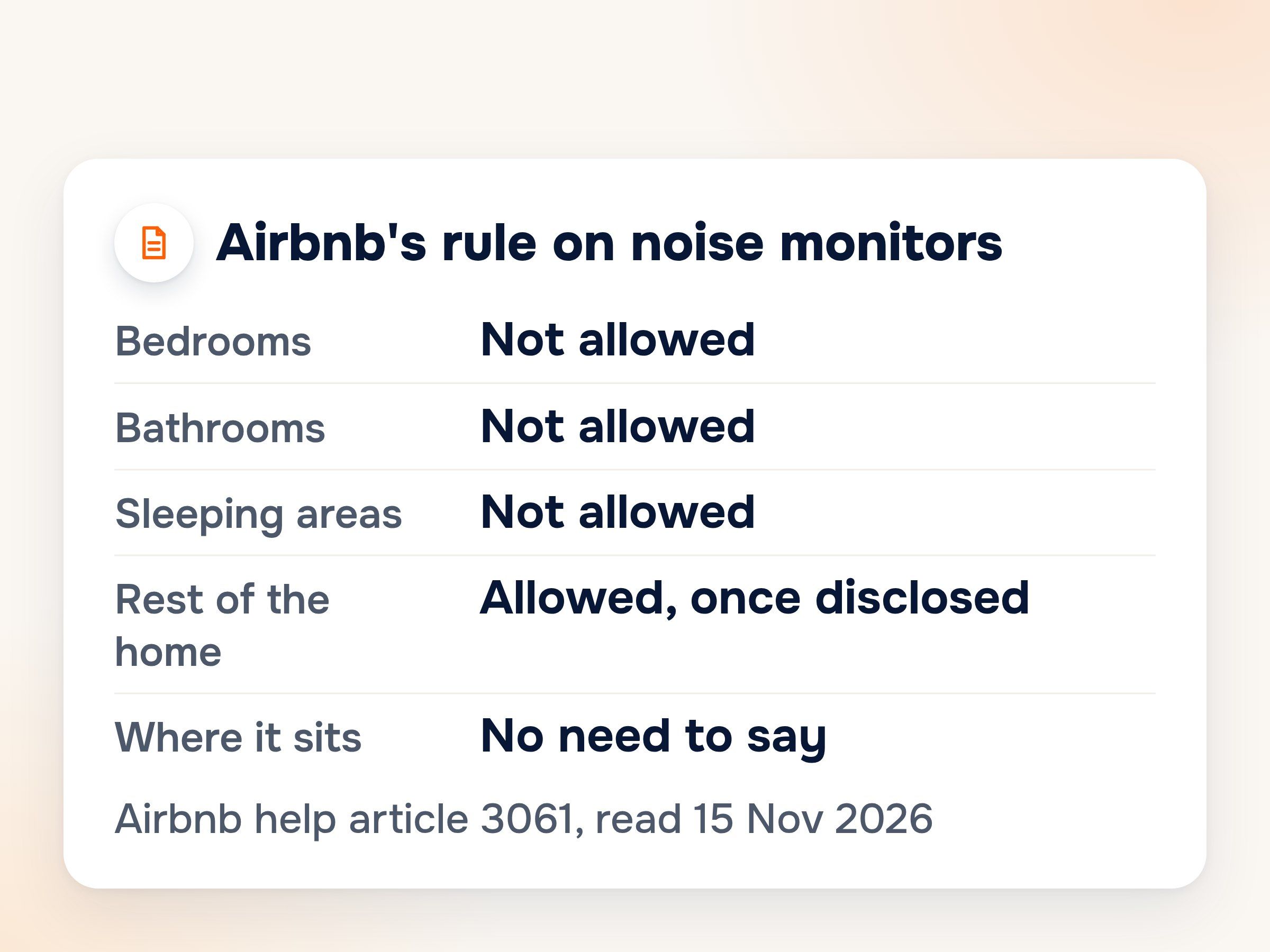
Airbnb's rule for noise monitors, which this post applies to every sensor
Settle the rule before you place anything. Airbnb allows noise decibel monitors inside the home, but not in bedrooms, bathrooms or sleeping areas, and hosts must tell guests about them. They don't have to say where each one sits (Airbnb's help page on devices, read 15 Nov 2026). This post applies that noise monitor rule to every sensor, as the safest reading.
That leaves plenty of room to work with:
- the living room
- the room by the balcony or patio door
- a den or office nobody sleeps in
- the kitchen and dining area
Watch for a sofa bed: it turns a living room or den into a sleeping area, so that room is off limits too. Our guide to whether monitoring sensors are allowed on Airbnb goes through the rule in full.
How many sensors do I need?
One for each shared room where smoking or vaping would happen. Smoke is read in the room the sensor is in, so the count follows those rooms. Noise and how many people are inside are different: for those, one sensor covers most small apartments.
- A studio or a home with one living space: one sensor, $99 once.
- A larger home with two shared rooms that matter, say a living room and a den by the patio door: two sensors, 2 x $99 = $198 once.
There is no subscription. Every sensor shows in the same Layla app, and each alert comes as a phone notification or an email, naming the room and the time. So you know where to look, and when.
Where in the room should the sensor go?
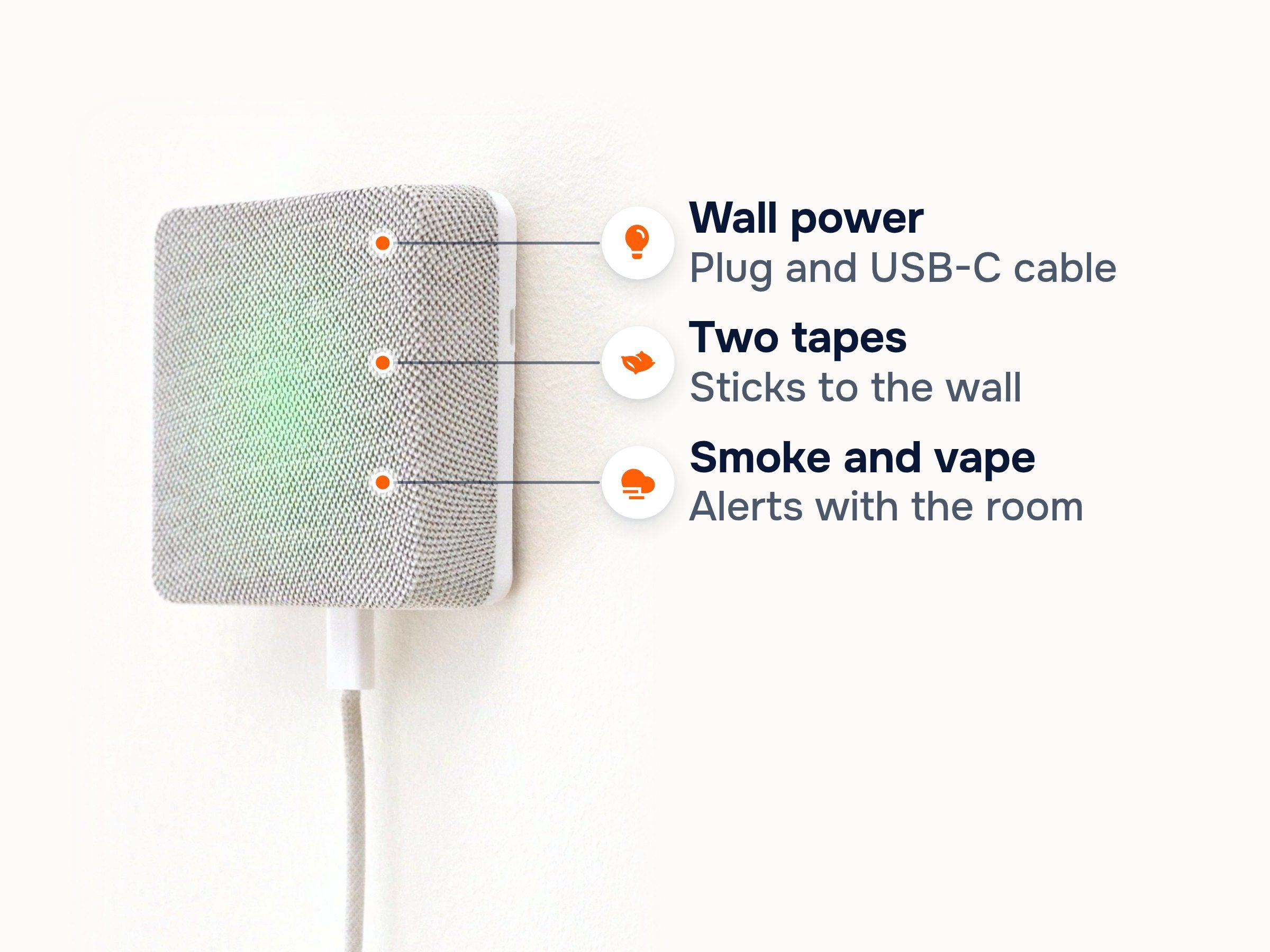
The Layla sensor on a wall: wall power, two tapes in the box, alerts with the room
Start from the outlet. The sensor runs on wall power and has no battery, so it goes within reach of its cable. The box holds the sensor, a plug adapter, a USB-C cable, two double-sided tapes and a quick guide.
- Stick it to the wall with the tape in the box, or set it on a shelf.
- Place it where guests spend their time in the room, such as near the sofa or the balcony door.
- Keep it out of reach of little hands, and away from the stove.
It is small, 2.6 x 2.6 x 0.9 in, with no camera and no screen, just one status light, so it blends into the room. Setup takes about 2 minutes: plug it in, find it in the Layla app, connect it to Wi-Fi and activate it. Layla is a monitor and works alongside the home's smoke alarms, never in place of them.
Should I tell guests about the sensor?
Yes. Airbnb requires noise monitors to be disclosed, but not where they sit. Say it in your listing and house rules, right next to your no-smoking and no-vaping rule.
Then say what it is not: no camera, and no audio recorded. That is what guests want to hear. And a guest who knows a sensor is there is less likely to try in the first place. For the wording of the rule itself and what to do when it's broken, see how to enforce a no-smoking policy in your rental.
What else should the sensor in the living room catch?
Guests who smoke inside often come with a party, or with more people than they booked. That happens in the same living room. All-in-One is one sensor, $299 once, with the same smoke and vape alerts as Smoke & Air Quality, plus noise levels in decibels and how many people are inside.
If smoking is your problem, though, start with a sensor in each room where guests slip off to smoke, and you'll know the room and the time it happened.
Get Smoke & Air Quality for $99, once
Keep reading

Best for: health-conscious homes
Smoke & Air Quality
Air quality, mold and smoke monitoring for healthy homes and smoke-free rentals.
Included forever — no subscription
- Mold-risk early warning
- Smoke & cigarette detection
- Air quality score (IAQ) with alerts
- CO₂ & bVOC monitoring
- AI air insights & recommendations
- Allergy-comfort monitoring
No monthly fees. Ever.
30-day money back guarantee