BLOG
Airbnb Anti-Party Technology: What Actually Works in 2026
 By Nangyal Khan··Updated
 5 min read

Parties remain one of the fastest ways for a short-term rental to turn into a costly problem. For Airbnb hosts, a single unauthorised gathering can lead to a range of problems. These may include property damage, noise complaints, broken house rules and negative reviews that affect long-term bookings.
Complaints related to noise, overcrowding and disruptive guest behaviour continue to create challenges for short-term rental operators in 2026. In many markets, stricter compliance requirements and local regulations are making prevention more important than ever.
This is where Airbnb anti-party technology has become a practical part of hosting operations. What was once seen as an extra layer of protection is now becoming essential for risk management.
What Is Airbnb Anti-Party Technology?
Airbnb anti-party technology is a system designed to stop high-risk party bookings before they happen. It uses artificial intelligence and machine learning to review booking patterns and assess risk before a reservation is confirmed. This proactive approach has helped reduce party-related reports by more than 50%, making it a major tool for host protection.
For party prevention in Airbnb, the system analyses hundreds of booking signals to identify risky behaviour. These signals include last-minute reservations, guest distance from the property, listing type and stay length. Bookings for 1 to 3 nights, especially for entire homes, are often considered higher risk and may face restrictions.
Airbnb runs this technology throughout the year. That said, enforcement becomes stricter during holiday periods and peak celebration dates when party incidents tend to increase. By stopping risky bookings at the source, party prevention in Airbnb becomes more effective and helps reduce neighbour complaints, property damage and rule violations.
Why Traditional Prevention Methods No Longer Work
Traditional hosting methods are no longer enough to manage modern party risks. Guest behaviour becomes harder to predict and party organisers become more strategic. As a result, relying only on manual checks, house rules or host judgement leaves major gaps in protection. Effective Airbnb party prevention now depends on faster, smarter and more proactive systems.
Manual guest screening is too limited
Reviewing guest profiles and messages manually takes time and depends heavily on personal judgement. This makes it easier for experienced party organisers to bypass checks using fake profiles, burner accounts or third-party bookings.
Machine learning analyses hundreds of booking signals
Modern Airbnb party prevention systems now review hundreds of data points to detect risk. These include last-minute reservations, one-night bookings and bookings for larger homes located close to the guest's home address, all of which can signal higher party risk.
Reactive methods act too late
Traditional measures like security deposits or neighbour complaints usually happen after damage has already occurred. New technology such as noise and occupancy monitoring helps hosts stop Airbnb parties earlier by detecting unusual activity in real time.
Data shows technology works at scale
Airbnb's data-driven system has already blocked or redirected over 51,000 guests in the U.S. from making high-risk reservations. This shows that automated prevention is far more effective than traditional screening methods.
To stop Airbnb parties, hosts now need prevention systems that work before guests arrive and during the stay, not after the problem has already escalated.
The Most Effective Airbnb Anti-Party Technologies in 2026
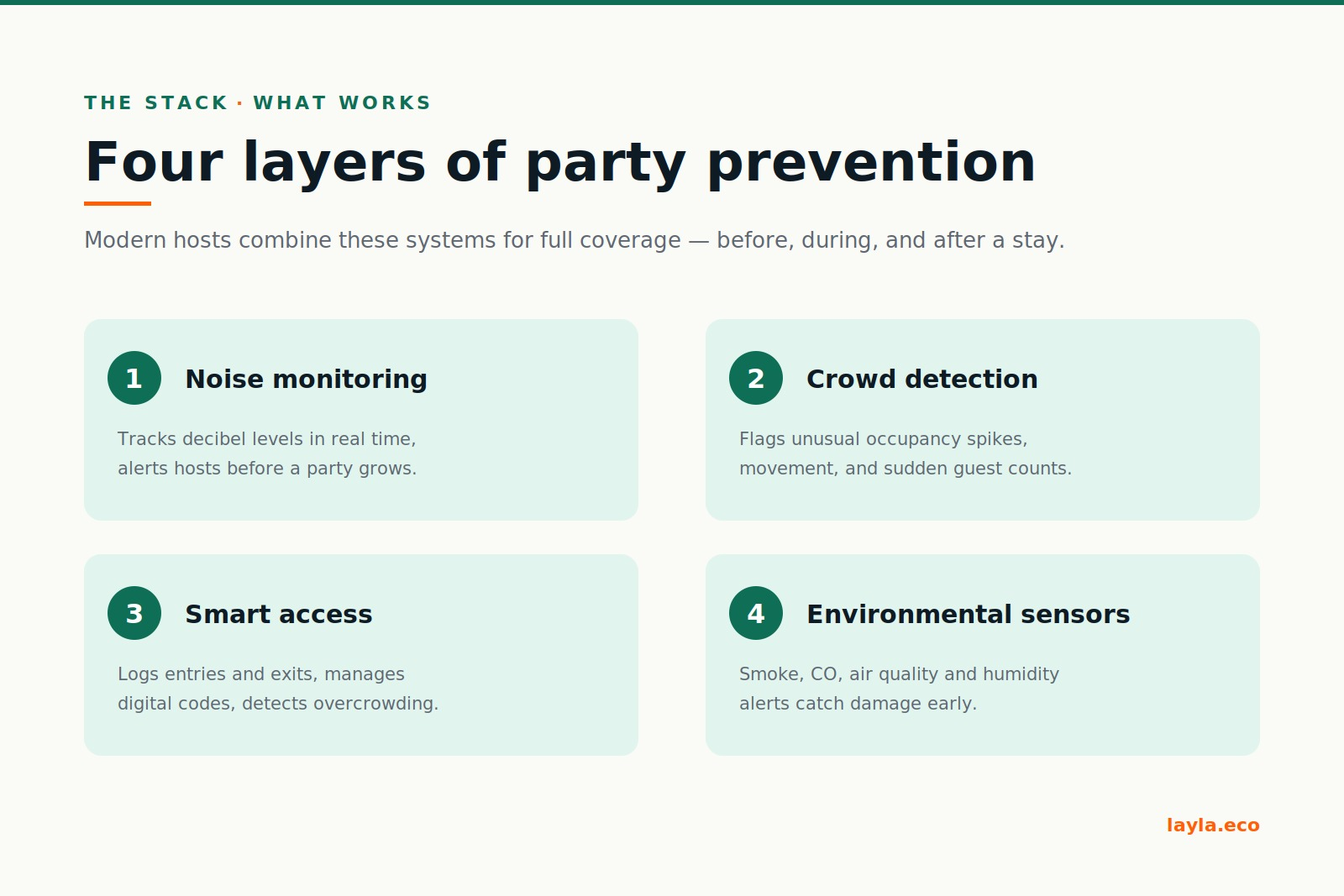
In 2026, effective party prevention is no longer about one device. The strongest Airbnb anti party technology uses multiple smart systems working together to detect unusual activity, reduce property risks and help hosts act before a gathering turns into damage or neighbour complaints.
- Noise Monitoring Systems: Noise monitoring remains one of the most reliable forms of Airbnb anti-party technology. These devices track sound levels in real time and alert hosts when noise crosses normal limits. Unlike cameras, they protect guest privacy while giving hosts an early warning before a party grows.
- Crowd Detection Technology: A modern party detector Airbnb setup now goes beyond noise. Crowd detection tools can identify unusual occupancy patterns, sudden guest increases and abnormal movement activity.
- Smart Access Control: Smart locks have become a major part of Airbnb anti party technology. Hosts can track entry and exit activity, manage digital access codes and detect if too many people are entering the property at once.
- Environmental Monitoring and Property Protection: Temperature spikes, smoke detection, poor air quality and humidity changes can signal larger issues. Smart sensors help hosts identify these problems early before they become expensive repairs or safety concerns.
- Integrated Monitoring Platforms Like Layla.eco: Platforms like Layla.eco combine multiple layers of protection into one privacy-first system. Instead of managing separate devices, hosts get one dashboard for full property visibility.
With features like crowd detection, noise alerts, air quality monitoring, smoke detection, among others, Layla.eco helps hosts stay in control even when off-site.
Airbnb Party Policy 2026
Airbnb's 2026 party policy strictly prohibits unauthorised parties and disruptive events in all rental listings worldwide. This includes overcrowding, excessive noise and gatherings that create safety issues or disturb nearby residents.
To support enforcement, Airbnb anti-party technology is used to screen bookings and block high-risk reservations before they are confirmed. Hosts and guests who violate Airbnb's party policy may face penalties, including listing suspension or permanent account removal.
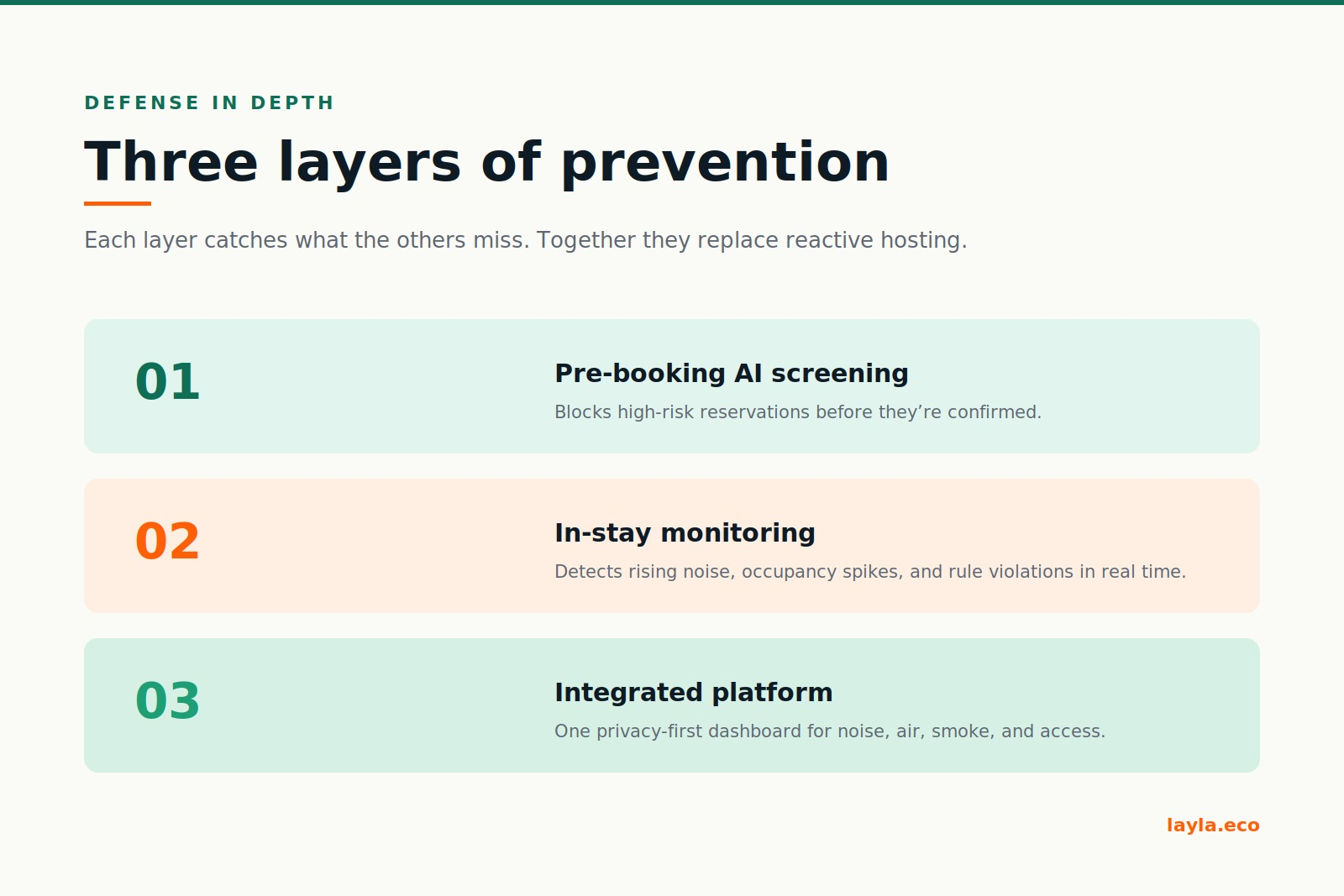
Smarter Protection Against Airbnb Party Risks
Anti-party technology has become a core part of responsible hosting in 2026. With stricter platform rules, higher guest expectations and growing neighbour concerns, strong party prevention in Airbnb is no longer optional. Hosts who invest in prevention are better positioned to protect their property, reputation and long-term revenue.
The cost of preventing a party is far lower than dealing with property damage, refunds, complaints or listing penalties after it happens. The most effective systems work by identifying risks early and stopping problems before they escalate, making party prevention in Airbnb more practical and reliable.
For stronger protection, opt for Layla.eco. It helps hosts monitor noise, occupancy, air quality, energy usage and overall property conditions in one privacy-first system, giving real-time insights to reduce risks and protect short-term rental operations before issues escalate.

Best for: full property coverage
All-in-One
Noise monitoring, smoke detection and smart AC control for complete coverage.
Everything included
Everything in Noise & Security Pro
AI party detector, noise alerts, intruder & break-in, occupancy, 180-day history, indoor + outdoor climate
Everything in Smoke & Air Quality
Air quality index (IAQ), CO2, bVOC, mold & smoke — full indoor + outdoor climate
Everything in AC Control & Energy
Smart AC (150+ brands), Eco Mode, schedules, filter health
Plus exclusive
- Advanced reports & insights
- Priority support
- Priority support
No monthly fees. Ever.
One sensor. Full coverage
One sensor. Full coverage.* Layla 3.0 monitors noise, air quality, motion, occupancy, temperature, humidity, pressure, VOCs, CO2, and controls your AC - from a single device on your shelf.
No subscription means no surprise costs.
Pay once. Every feature unlocked. Forever. No monthly fees eating into your rental margins or household budget.
The smartest buy is the one you make once.
Other solutions charge per-feature monthly subscriptions that exceed the device cost within a year. Layla's all-in-one pays for itself compared to any subscription alternative.
30-day money back guarantee