BLOG
Got a Neighbor Complaint About Your Airbnb? Here's Exactly What to Do
 By Nangyal Khan··Updated
 6 min read

A neighbor complaint can quickly become a serious problem for Airbnb hosts, even when the issue seems minor at first. Short-term rentals operate in shared communities and neighbors are often the first to notice disruptions like late-night noise, extra cars in the parking or overflowing trash. When concerns are reported, they can affect not only your relationship with the surrounding community but also the long-term performance of your listing.
What starts as a small inconvenience can escalate fast. A single Airbnb neighbor complaint may lead to warnings from your hosting platform, negative guest experiences, fines or even listing suspension in areas with strict short-term rental regulations. In some cities, repeated complaints can trigger compliance reviews or enforcement actions.
Understand the Nature of the Complaint
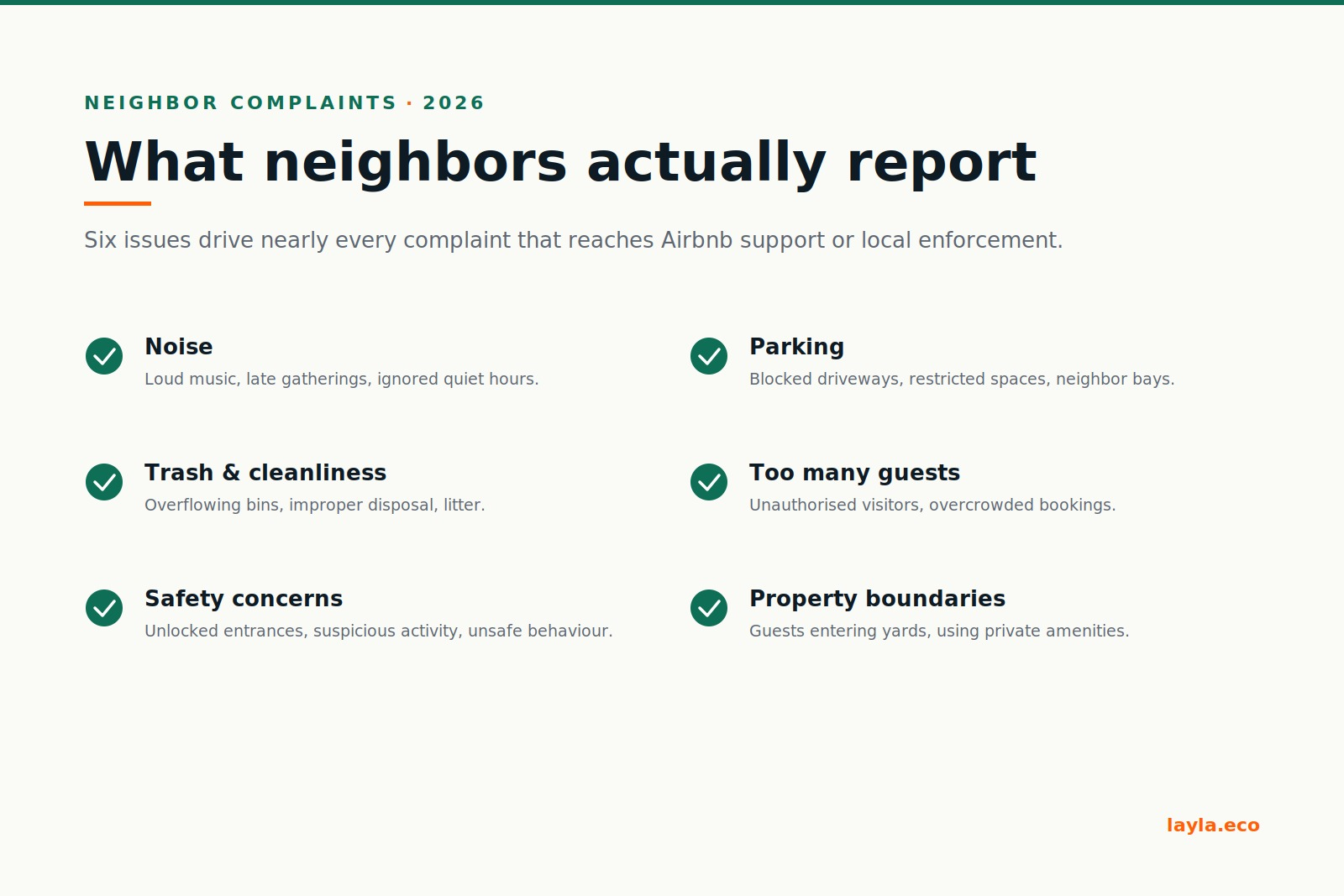
Before taking action, identify exactly what the complaint is about. Not every issue requires the same response and understanding the root cause helps you resolve it more effectively.
- Noise complaints: A noise complaint in Airbnb is one of the most common problems hosts face. Loud music, late-night gatherings or guests ignoring quiet hours can frustrate neighbors quickly.
- Parking problems: Guests taking up restricted spaces, blocking driveways or parking in neighbor-designated areas can create immediate tension. Clear parking instructions can reduce this risk.
- Trash and cleanliness issues: Overflowing bins, improper waste disposal or litter around the property can negatively affect the neighbohood and attract complaints fast.
- Too many guests or parties: Unauthorised visitors or overcrowded bookings often lead to noise, security concerns and extra wear on the property. This can also violate local occupancy laws.
- Safety or security concerns: Neighbors may report suspicious activity, unlocked entrances or unsafe guest behaviour. These complaints can impact trust and create serious liability concerns.
- Property boundary disputes: Issues like guests entering neighboring yards, using private amenities or crossing property lines can lead to conflict and legal disputes.
Neighbor Reported My Airbnb? What to Do
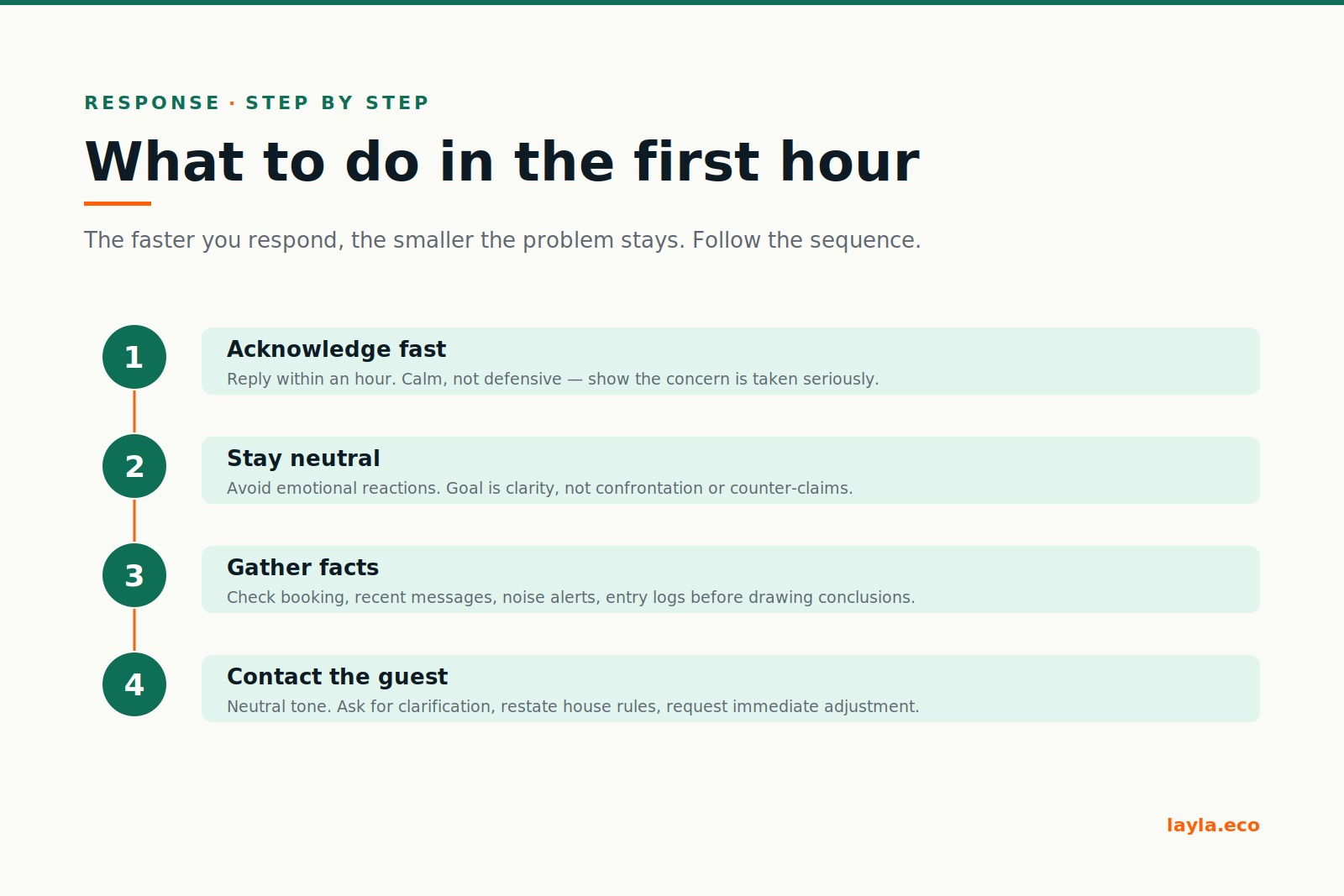
When a complaining neighbor issue comes up, the speed of your response matters more than anything else. Delays can make the situation worse, increase frustration and even lead to official action from your hosting platform or local authorities.
Start by acknowledging the message as soon as you receive it. Even if you do not have all the details yet, a simple, calm response lets the neighbor know their concern is being taken seriously.
Stay calm and avoid reacting defensively. It is easy to assume the complaint is exaggerated or unfair, but an emotional response can damage relationships and make resolution harder. Your goal at this stage is clarity, not confrontation.
Next, gather facts before making any conclusions. Check booking details, recent guest messages and any available monitoring data such as noise alerts or entry logs. This helps you understand whether the issue is ongoing, isolated or already resolved.
If needed, contact the guest directly. Keep the tone neutral and factual. Ask for clarification, remind them of house rules and request immediate adjustment if required. In many cases, quick guest communication resolves the issue before it escalates further.
Prevent Future Complaints
Preventing issues is more effective than reacting after an airbnb neighbor complaint has already been made. Once a listing develops a pattern of disturbances, it becomes harder to maintain trust with neighbors and platforms. A proactive setup reduces risk and keeps operations stable.
Install noise monitoring systems to catch problems early. These tools help detect unusual sound levels before they turn into a how to respond to noise complaint airbnb situations. Early alerts allow hosts to intervene in real time instead of dealing with escalations after neighbors get involved.
Use smart locks for guest tracking. They help you understand check-in patterns, occupancy flow and unexpected access activity. This adds a layer of visibility that reduces uncertainty and supports better control of the property.
Automate check-in and check-out reminders. Clear instructions about quiet hours, parking and house rules help set expectations from the start. Most complaints happen when guests are not fully aware of boundaries.
Screen guests more carefully. Review booking history, ratings and communication style before approval. A strong screening process reduces the likelihood of disruptive stays.
Set clear expectations before arrival. A well-structured message outlining rules, penalties and neighborhood sensitivity helps prevent misunderstandings that often lead to complaints.
Tools like Layla.eco can support this entire process by combining monitoring, automation and compliance tracking in one system. It helps hosts stay ahead of potential issues instead of reacting after an airbnb neighbor complaint is already made.
When to Escalate the Matter
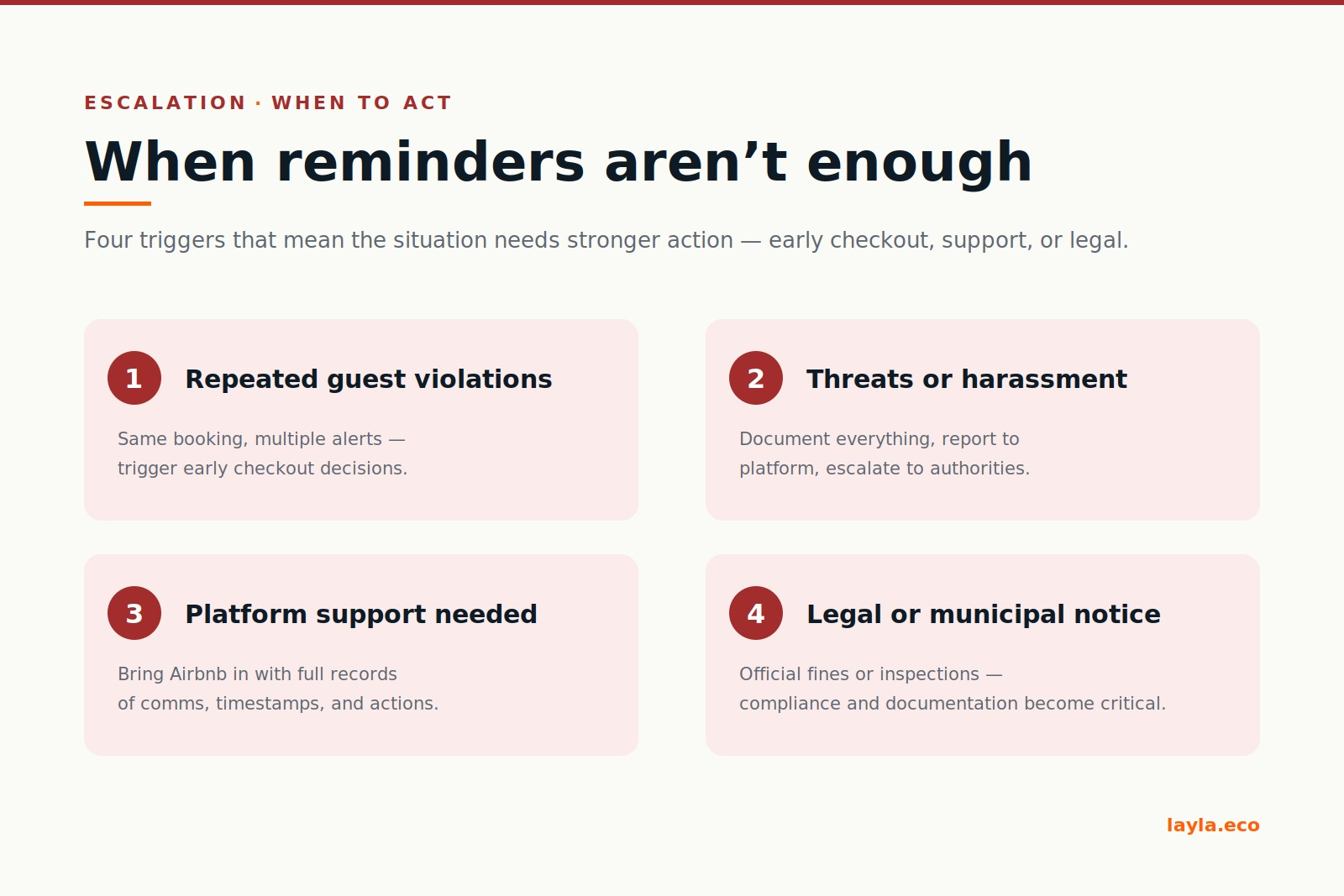
Some situations move beyond simple reminders and require stronger action. If ignored, they can lead to repeated disruptions, neighbor frustration and platform penalties.
Repeated complaints from the same guest
When issues continue despite warnings, especially involving airbnb quiet hours, it signals clear rule violations that need escalation or early checkout decisions.
Threats, harassment or false reporting
If neighbors or guests start escalating emotionally or making misleading claims, the situation should be documented and reported through official channels.
Platform support involvement
When internal resolution fails, bring in Airbnb support with full records of communication, timestamps and actions taken. This is often necessary when managing ongoing complaint cases.
Legal or municipal intervention
If complaints lead to official notices, fines or inspections, immediate compliance steps are required. At this stage, professional handling and documentation become critical to protect the interest of the affected party.
Stay Ahead of Every Airbnb Neighbor Complaint
A quick response can decide whether the complaint remains a one-time issue or turns into a serious operational risk. Fast action helps protect your listing, maintain neighbor trust and reduce the chance of platform warnings or penalties.
Prevention is always more effective than damage control. Once a complaint escalates, it often takes more time, effort and resources to repair relationships and restore listing performance.
To stay ahead of issues before they escalate, use Layla.eco. It helps hosts detect risks early, improve compliance and manage guest behaviour more effectively, reducing the chances of future airbnb neighbor complaint situations and protecting your rental business long term.

Best for: full property coverage
All-in-One
Noise monitoring, smoke detection and smart AC control for complete coverage.
Everything included
Everything in Noise & Security Pro
AI party detector, noise alerts, intruder & break-in, occupancy, 180-day history, indoor + outdoor climate
Everything in Smoke & Air Quality
Air quality index (IAQ), CO2, bVOC, mold & smoke — full indoor + outdoor climate
Everything in AC Control & Energy
Smart AC (150+ brands), Eco Mode, schedules, filter health
Plus exclusive
- Advanced reports & insights
- Priority support
- Priority support
No monthly fees. Ever.
One sensor. Full coverage
One sensor. Full coverage.* Layla 3.0 monitors noise, air quality, motion, occupancy, temperature, humidity, pressure, VOCs, CO2, and controls your AC - from a single device on your shelf.
No subscription means no surprise costs.
Pay once. Every feature unlocked. Forever. No monthly fees eating into your rental margins or household budget.
The smartest buy is the one you make once.
Other solutions charge per-feature monthly subscriptions that exceed the device cost within a year. Layla's all-in-one pays for itself compared to any subscription alternative.
30-day money back guarantee