BLOG
Short-Term Rental Insurance: What Hosts Actually Need to Know in 2026
 By Nangyal Khan··Updated
 5 min read
Short-term rentals have changed how property owners generate income, but they have also changed the level of risk involved. Traditional homeowners policies were built for owner-occupied living, not frequent guest turnover, property access by strangers or business-related liability. That is why short term rental insurance has become an essential part of hosting in 2026.
Having the right insurance in place helps protect more than the building itself. It protects your earnings, reduces liability exposure and gives hosts a stronger safety net when unexpected problems happen. For anyone operating a short-term rental, proper coverage is now part of running a sustainable business.
What Is Short-Term Rental Insurance?
Short-term rental insurance is based on specialised policies designed for properties rented out for short stays through platforms like Airbnb and Vrbo. Unlike standard home insurance, this type of vacation rental insurance accounts for the commercial nature of hosting and the higher risks that come with frequent guest turnover.
It typically combines property protection, liability coverage and income protection into one policy built specifically for short-term rental activity. This means hosts can be covered for guest-related damage, injury claims, theft and even lost income from temporary closures, depending on the policy.
Key Coverages Hosts Should Look For
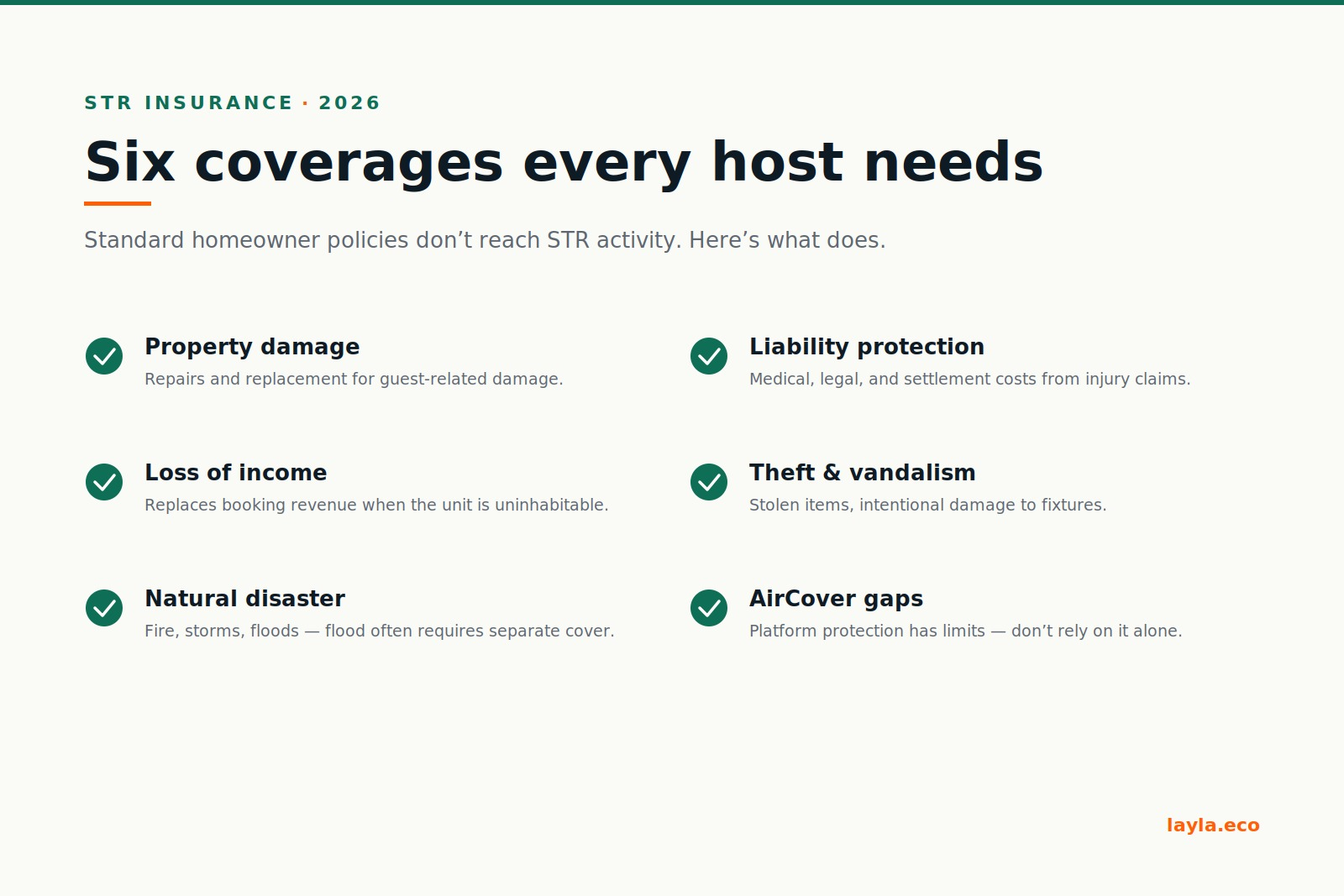
Choosing the right short term rental insurance starts with understanding what protections actually matter. Not all policies cover the same risks and hosts need coverage that reflects the realities of frequent guest turnover and property use. The right policy should protect both the property and the income it generates.
Property Damage Coverage
Property damage coverage helps pay for repairs or replacement when guests accidentally damage furniture, appliances, flooring, walls, or other structural parts of the home. For furnished rentals, this is one of the most important protections because even minor incidents can lead to expensive repairs.
Liability Protection
Liability coverage protects hosts if a guest gets injured on the property and files a claim. This can include medical expenses, legal fees and settlement costs. Slip-and-fall accidents, pool injuries or unsafe conditions can create serious financial exposure that is not covered.
Loss of Income Protection
If your rental becomes temporarily uninhabitable due to covered damage, loss of income coverage helps replace missed booking revenue. This is especially valuable during repairs, emergency maintenance or weather-related disruptions that force cancellations.
Theft and Vandalism Coverage
Guest-related theft and vandalism can be difficult to recover from without specialised protection. This coverage helps pay for stolen items or intentional damage to furniture, electronics and property fixtures.
Natural Disaster Coverage
Fire, storms, floods and other natural disasters can cause property damage or loss. Hosts should review policies carefully. Some disaster-related coverage, such as flood insurance, may require separate protection depending on the location.
Airbnb AirCover vs Real Insurance
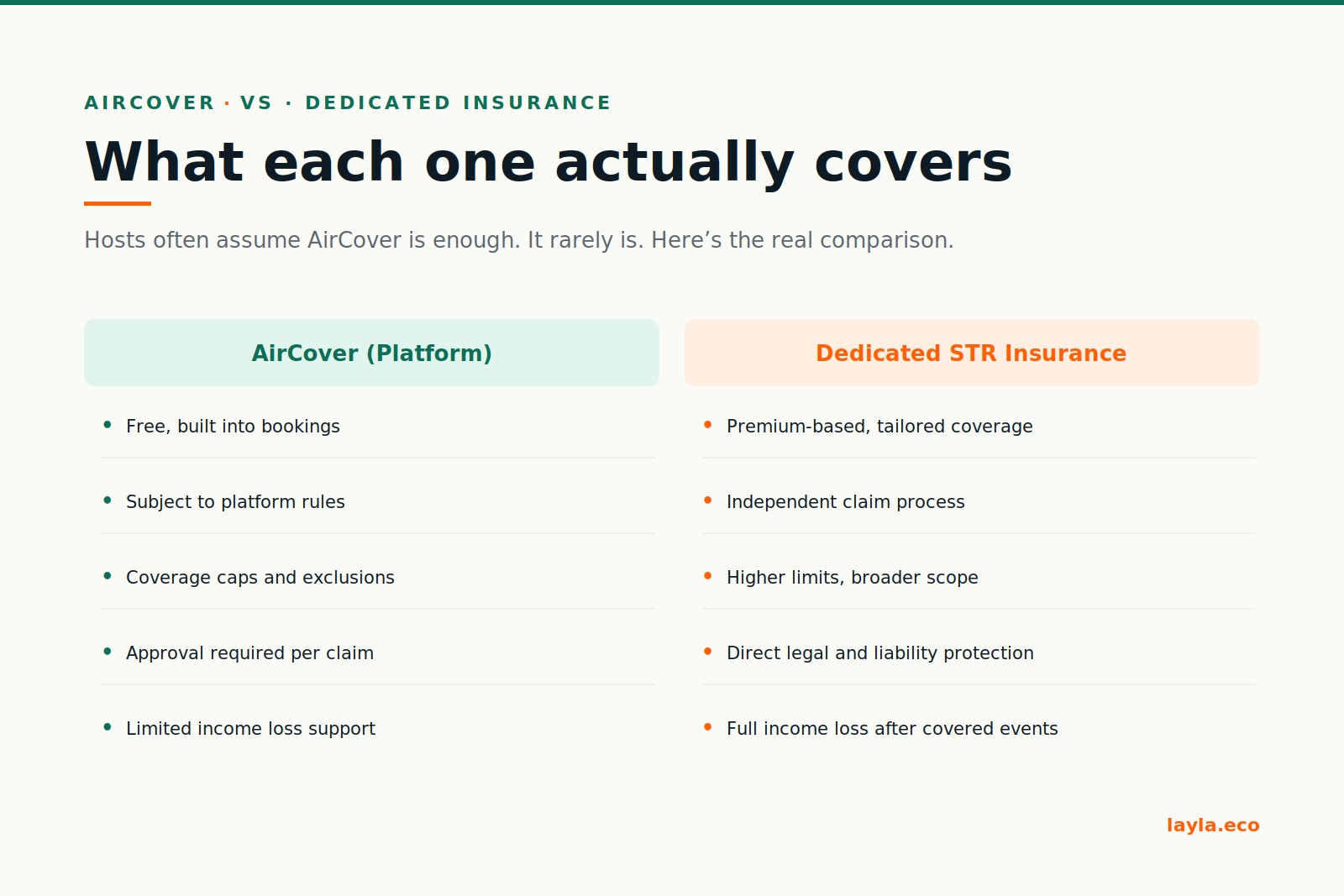
Airbnb offers AirCover, which is a built-in protection program that offers complimentary coverage for both hosts and guests on every booking. While helpful, it is not a complete replacement for dedicated insurance. Coverage is subject to platform rules, claim approvals and specific exclusions that may limit payouts.
One of the biggest mistakes hosts make is relying entirely on platform protection. Instead, by maintaining proper insurance Airbnb hosts can depend on it independently. AirCover may not cover all property damage, lost income or certain legal claims, leaving hosts exposed when bigger incidents happen.
How Advanced Monitoring Tools Help Reduce Insurance Risk
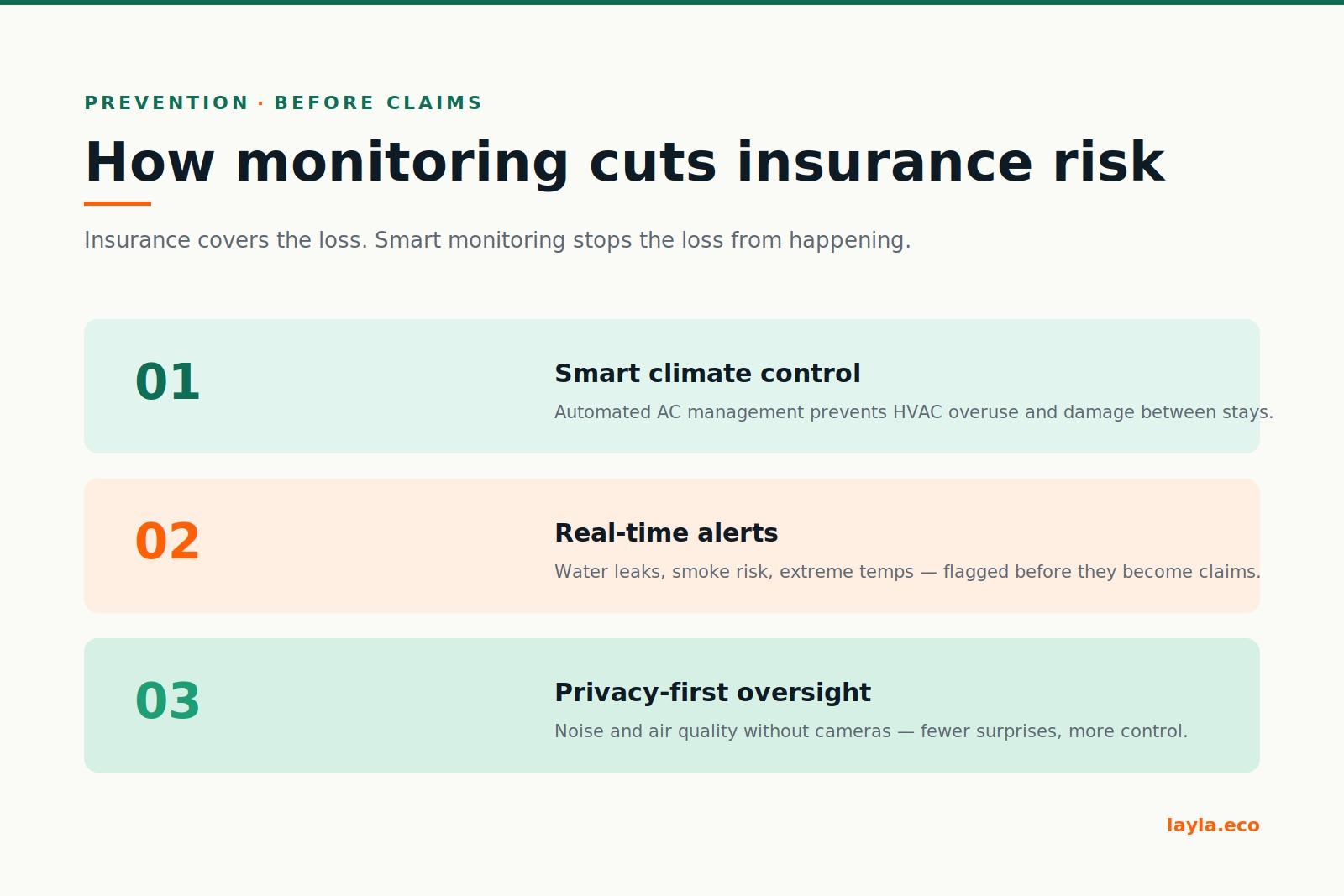
Insurance helps cover financial loss, but prevention is what helps avoid the loss in the first place. For hosts managing short-term rentals, advanced monitoring tools have become a practical layer of protection alongside airbnb host insurance. By catching issues early and automating key systems, hosts can reduce claims, prevent damage and keep properties operating smoothly.
Layla.eco is built for this exact purpose as an all-in-one protector for homes and rentals. It helps hosts monitor noise, air quality and safety in real time without cameras or recordings, making it easier to stay aware of what is happening inside the property while respecting guest privacy.
Smart climate control is one of the biggest advantages. With automated AC management, hosts can reduce unnecessary energy use, prevent system overuse and maintain safe indoor temperatures between stays. This lowers operational costs while reducing the risk of HVAC-related issues.
Real-time alerts for water leaks, extreme temperatures, smoke risks and unusual activity help hosts respond before small problems turn into expensive insurance claims. Better visibility between guest stays also means fewer surprises, especially for remote hosts managing multiple properties.
Many hosts ask, does Airbnb cover damage? Platform protection may help in some cases, but it often comes with limitations, claim requirements and exclusions. Tools like Layla strengthen your protection strategy by reducing the chances of damage happening in the first place. Combined with dedicated insurance, smarter monitoring creates stronger long-term protection for both your property and your income.
Protect Your Rental with Insurance and Smarter Prevention
Running a short-term rental in 2026 means treating it like a real business and insurance is a core part of that foundation. From guest-related damage to liability claims and unexpected disruptions, the right coverage helps protect both your property and the income it generates.
A strong policy does more than cover repairs. It protects profitability, reduces financial uncertainty and gives hosts more confidence when managing guest stays. That being said, insurance works best when paired with prevention. Proactive monitoring and automation can help reduce incidents before they turn into costly claims.
Choose Layla.eco and enjoy an added layer of protection against both financial and operational risks. The cutting-edge platform offers real-time alerts, noise and air quality monitoring, smart AC automation and remote property oversight.

Best for: full property coverage
All-in-One
Noise monitoring, smoke detection and smart AC control for complete coverage.
Everything included
Everything in Noise & Security Pro
AI party detector, noise alerts, intruder & break-in, occupancy, 180-day history, indoor + outdoor climate
Everything in Smoke & Air Quality
Air quality index (IAQ), CO2, bVOC, mold & smoke — full indoor + outdoor climate
Everything in AC Control & Energy
Smart AC (150+ brands), Eco Mode, schedules, filter health
Plus exclusive
- Advanced reports & insights
- Priority support
- Priority support
No monthly fees. Ever.
One sensor. Full coverage
One sensor. Full coverage.* Layla 3.0 monitors noise, air quality, motion, occupancy, temperature, humidity, pressure, VOCs, CO2, and controls your AC - from a single device on your shelf.
No subscription means no surprise costs.
Pay once. Every feature unlocked. Forever. No monthly fees eating into your rental margins or household budget.
The smartest buy is the one you make once.
Other solutions charge per-feature monthly subscriptions that exceed the device cost within a year. Layla's all-in-one pays for itself compared to any subscription alternative.
30-day money back guarantee