BLOG
Airbnb Host Tips: The 2026 Playbook for New Hosts
 By Nangyal Khan··Updated
 5 min read
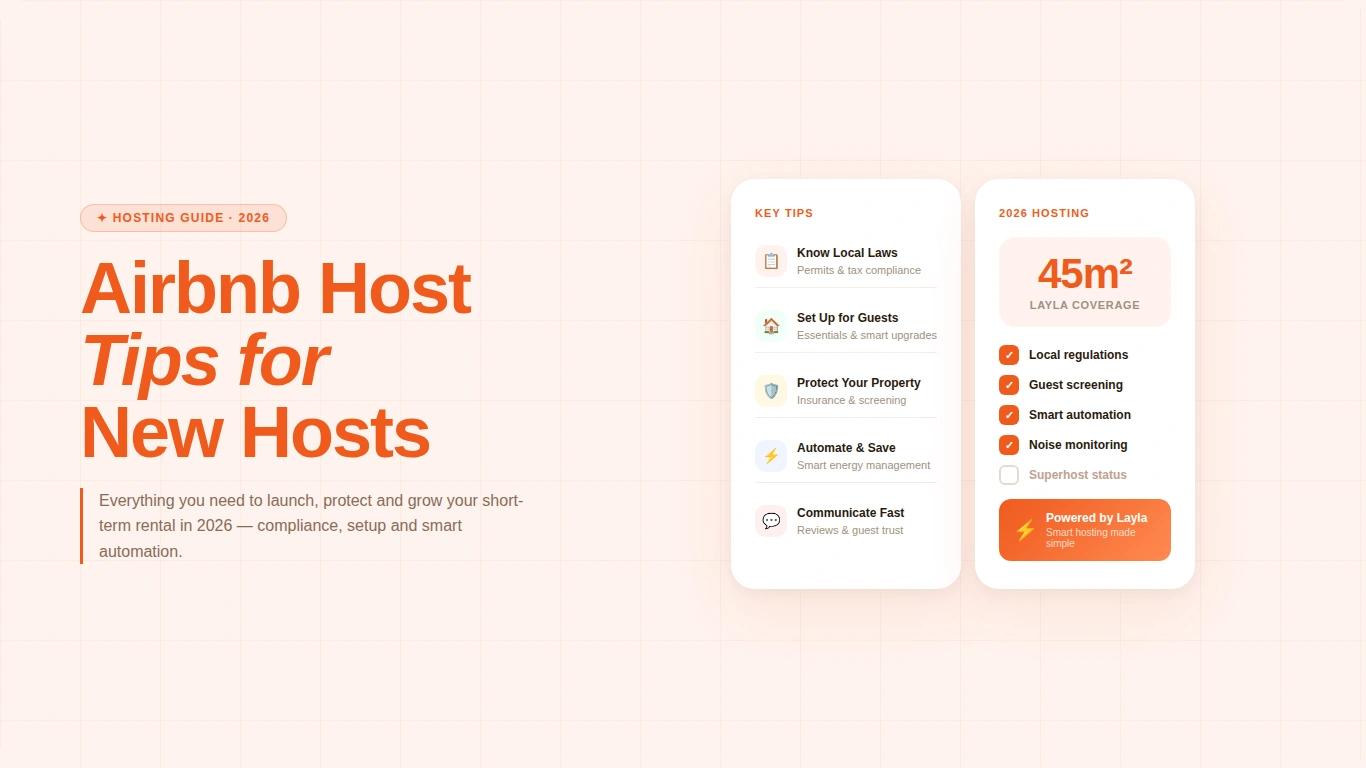
Getting started in short-term rentals looks very different in 2026 than it did just a few years ago. New regulations, stricter compliance checks and changing guest expectations have reshaped the hosting landscape across many markets. For anyone entering the space, understanding the latest Airbnb host tips is no longer optional. It is part of building a successful and sustainable rental business.
Understand Local Airbnb Laws Before Listing
One of the most important tips on hosting Airbnb successfully is to understand the legal rules before your listing goes live. Short-term rental laws can vary widely by city, county and state. Missing even one requirement can land you in hot water, resulting in fines, listing removal or operational restrictions.
Start by researching your local short-term rental regulations. Some cities allow vacation rentals freely, while others require minimum stay lengths, cap the number of guests or limit how often a property can be rented. These rules often change, which is why always check official local government sources.
Licensing and registration are also common requirements. Many areas require hosts to obtain a business licence, short-term rental permit, or registration number before accepting bookings. Tax registration may also be necessary to collect and remit occupancy taxes or tourism levies.
Set Up Your Property for Guest Success
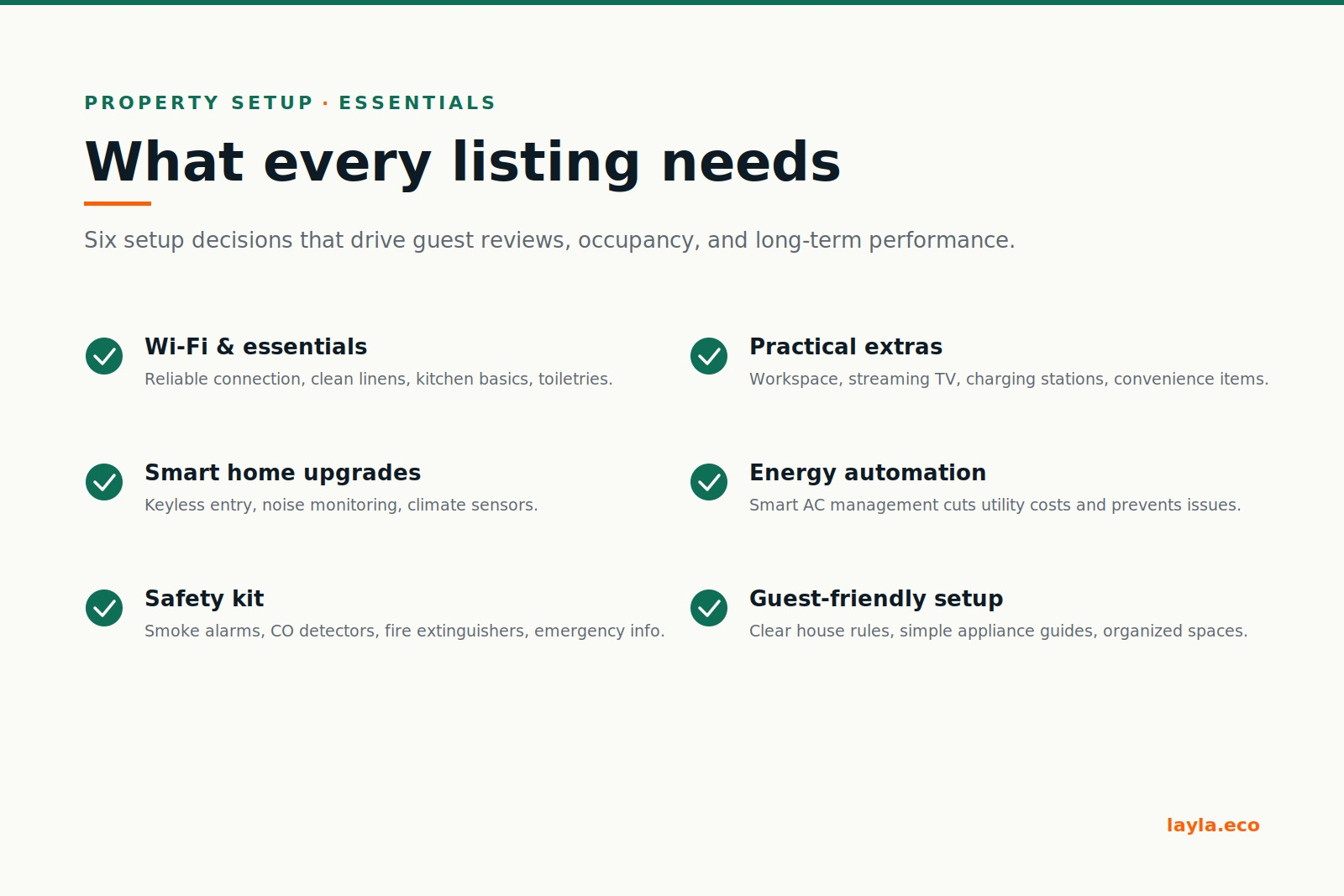
Preparing your property with guest comfort, convenience and safety in mind has a direct impact on a lot of factors. It can improve reviews, occupancy and long-term performance. In 2026, property setup remains one of the most valuable Airbnb host tips for new hosts. The setup should include
- Providing the essentials: Reliable Wi-Fi, clean linens, comfortable bedding, kitchen basics, toiletries and clear check-in instructions are now expected as standard.
- Adding practical extras: A dedicated workspace, streaming-ready TV, charging stations and thoughtful convenience items can improve guest satisfaction and increase booking appeal.
- Incorporating smart home upgrades: Keyless entry makes arrivals easier, while noise monitoring helps enforce house rules without affecting guest privacy.
- Reducing energy waste with automation: Smart climate tools like Layla.eco can automatically adjust AC usage, lower utility costs and alert hosts to potential issues before they become bigger problems.
- Prioritising safety: Install working smoke alarms, carbon monoxide detectors, fire extinguishers and provide visible emergency instructions to meet guest expectations and local safety standards.
- Creating a guest-friendly environment: Keep spaces organised, easy to navigate and comfortable, with clear house rules and simple guides for appliances and amenities.
Protect Your Property and Business
Protecting your property is a critical part of building a sustainable short-term rental business. While earning bookings is important, m
anaging risk is equally essential. Damage, liability issues and guest disputes can quickly affect profitability if proper safeguards are not in place. That is why protection measures should be a key part of every Airbnb hosting checklist for new hosts.
Start by reviewing your insurance coverage. Many standard homeowner policies do not fully cover short-term rental activity, which can leave gaps in protection. Specialised short-term rental insurance can provide coverage for property damage, liability claims and even income loss in certain situations.
Guest screening is another important layer of protection. Reviewing guest profiles, past reviews and verification details can help reduce the risk of property misuse. Alongside screening, keeping updated photos and inventory records of your property can make damage claims easier to support if problems arise.
Avoid Common New Host Mistakes
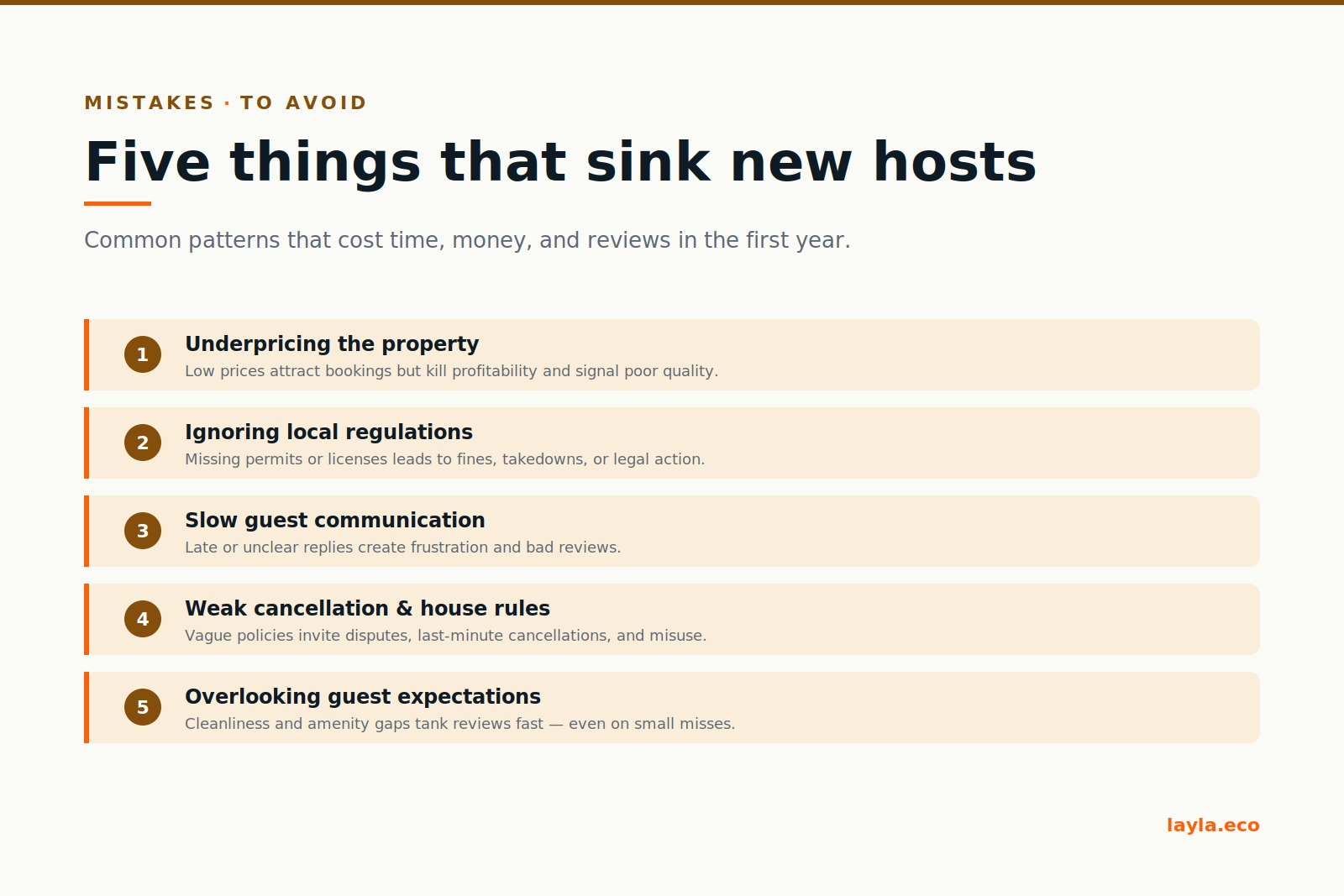
Starting strong often comes down to avoiding the mistakes that cost new hosts time, money and reviews. Many first time Airbnb host challenges are preventable with the right preparation. Following practical Airbnb host tips early can help create smoother operations and better guest experiences.
- Avoid underpricing your property: Low pricing may attract bookings, but it can hurt profitability and set the wrong expectations. Research your local market, compare similar listings and price based on demand, seasonality and amenities.
- Do not ignore local regulations: Missing permits, licences, or tax requirements can lead to fines or listing suspensions. One of the most important Airbnb host tips is staying compliant with local short-term rental laws from the start.
- Improve communication with guests: Slow replies or unclear instructions can create frustration and poor reviews. Quick responses, clear check-in details and proactive updates build trust and improve guest satisfaction.
- Strengthen cancellation and house rules: Weak policies can lead to misunderstandings, last-minute cancellations, or property misuse. Set clear cancellation terms and detailed house rules around noise, extra guests, smoking and check-out expectations.
- Do not overlook guest expectations: Cleanliness, comfort and easily accessible amenities directly affect reviews. First time Airbnb host success often depends on meeting basic guest expectations consistently.
Hosting in 2026 is more structured and competitive than ever - and success depends on preparation, compliance and efficient day-to-day management. Following the right Airbnb host tips from the start can help new hosts build stronger foundations, avoid costly mistakes and create stable, high-performing listings.
Smart systems and automation have also become essential Airbnb host tips for improving guest experiences and simplifying operations. From smoother check-ins to better communication and energy management, the right tools can reduce workload, improve efficiency and maintain consistent service quality.
Wondering how to be a superhost in 2026? Choose Layla.eco to simplify hosting and stay ahead in a fast-changing rental market. Compliance support, smarter property management, automated climate control and much more. The advanced features of the platform help reduce daily workload, improve efficiency and create a smoother experience for both hosts and guests.

Best for: full property coverage
All-in-One
Noise monitoring, smoke detection and smart AC control for complete coverage.
Everything included
Everything in Noise & Security Pro
AI party detector, noise alerts, intruder & break-in, occupancy, 180-day history, indoor + outdoor climate
Everything in Smoke & Air Quality
Air quality index (IAQ), CO2, bVOC, mold & smoke — full indoor + outdoor climate
Everything in AC Control & Energy
Smart AC (150+ brands), Eco Mode, schedules, filter health
Plus exclusive
- Advanced reports & insights
- Priority support
- Priority support
No monthly fees. Ever.
One sensor. Full coverage
One sensor. Full coverage.* Layla 3.0 monitors noise, air quality, motion, occupancy, temperature, humidity, pressure, VOCs, CO2, and controls your AC - from a single device on your shelf.
No subscription means no surprise costs.
Pay once. Every feature unlocked. Forever. No monthly fees eating into your rental margins or household budget.
The smartest buy is the one you make once.
Other solutions charge per-feature monthly subscriptions that exceed the device cost within a year. Layla's all-in-one pays for itself compared to any subscription alternative.
30-day money back guarantee